
Last updated October 31, 2026
 Home additions & ADU
 Kitchen remodeling
 Bathroom remodeling
 Roofing
 Windows & doors
 Driveway & pavers
 Fence
Free written scope consultation - allowances, timeline, and change-order rules on paper before a single trade is scheduled
Seasonal Construction Care for Sunrise Manor: Year-Round Homeowner’s Guide
In Sunrise Manor, your roof doesn’t fail in winter. It fails in October, after four months of 110°F UV exposure have cooked every seal, seam, and sealant into brittle failure, right before the first monsoon remnant moisture finds its way inside. Most seasonal maintenance guides assume four seasons. Sunrise Manor doesn’t have four seasons. It has two brutal ones and two narrow windows to get work done right, and homeowners who schedule maintenance on a calendar-year cycle miss both of them. This guide restructures home care around the actual thermal and weather patterns that drive deterioration in this specific desert environment, so you can protect your home before the damage happens, not after. For more guides & resources on desert home maintenance, explore our blog.
Quick Answer
The Complete Guide to Construction in Sunrise Manor shows how seasonal construction care means scheduling exterior maintenance around two critical windows: May through June (pre-monsoon resealing and drainage prep, before the wettest months arrive) and March through April (the spring construction window, before daytime heat interferes with adhesives and material handling). The biggest mistake homeowners make is treating January as the start of maintenance season when the real deadlines are driven by UV degradation in summer and freeze cycles in winter.
Styles & brands we work with
Table of Contents
- Pre-Monsoon Season (May – June): The Only Window That Matters
- Monsoon Season (July – September): Monitoring During Active Storms
- Post-Summer Material Assessment (September – October)
- Winter Prep in the Desert: What Actually Fails When It Freezes
- Spring Construction Window (March – April): Schedule the Big Work Here
- The Sunrise Manor Seasonal Maintenance Checklist
- Common Mistakes to Avoid
- When to Call a Professional
Pre-Monsoon Season (May – June): The Only Window That Matters
If you only do one round of maintenance per year in Sunrise Manor, do it in May. Here’s why: your home’s exterior has spent April accumulating early heat exposure, and July through September will bring monsoon moisture that exploits every weakness created by that heat. The pre-monsoon window is short, but it is the single highest-leverage maintenance period in the desert calendar.
What happens during a Sunrise Manor summer is thermal cycling. Daytime temperatures push well past 100°F, and materials expand. At night, temperatures drop 25 to 30 degrees, and materials contract. That daily expansion-contraction cycle works on every sealant bead, every caulk joint, every flashing seam. After enough cycles, the material fatigues. It hairline-cracks. It pulls away from the substrate. And then the monsoon arrives and drives water into those exact gaps. This is not a hypothetical. In our experience on general contractor work in Sunrise Manor, the overwhelming majority of roof leak calls in August trace back to sealant failures that were visible and repairable in May.
Here is what to do during the pre-monsoon window:
- Inspect every roof penetration. Vent pipes, exhaust caps, skylight curbs, plumbing boots, and any satellite dish mounts. These are the first points of failure. Look for cracked sealant, pulled-away flashing, or exposed nail heads.
- Reseal window and door perimeters. Check the caulk lines around every window frame and exterior door jamb. If you can see gaps, peeling, or cracking, the seal has failed. A $12 tube of sealant applied in May prevents drywall damage in August.
- Clear and test all drainage paths. Clean gutters if you have them, clear roof scuppers, and make sure downspouts discharge at least three feet from the foundation. Regrade any swales that have flattened over the year.
- Check window weep holes. Most vinyl and aluminum windows have small drainage holes along the bottom track. If they are clogged with dust, which is constant in Sunrise Manor, water backs up inside the track and eventually works into the wall cavity. A pipe cleaner or compressed air clears them in seconds.
- Inspect stucco for hairline cracks. Desert stucco cracks from thermal movement. Small cracks are normal, but any crack wider than 1/16 inch or any crack that runs diagonally from a window corner should be sealed before monsoon moisture gets inside and rusts the underlying lath.
Material choice matters here, and it is why our approach at Steel Horse Construction is to spec the brand that fits the job. For sealing and repair work, we use products from manufacturers like Quikrete for concrete and stucco patching, because their formulas are engineered for the thermal realities of the Southwest. The product has to match the climate. A sealant rated for 90°F maximum will not survive a Sunrise Manor July.
Monsoon Season (July – September): Monitoring During Active Storms
Once monsoon season starts, the construction window for exterior sealant work has largely closed. Wet surfaces will not bond. New sealant will fail prematurely. The role shifts from prevention to monitoring, and knowing what to watch during a storm versus what can wait until after is the difference between a $500 repair and a $15,000 remediation.
During an active monsoon event, here is what deserves your attention:
- Downspout flow. Stand where you can see water exit the downspouts during a real rain. If water is spilling over gutter edges or gurgling at the downspout connection, your drainage is undersized or clogged. In Sunrise Manor, monsoon rain arrives in short, intense bursts. A system that handles a gentle rain fails completely under those conditions.
- Window sill drainage. Watch how water behaves on window sills. If water pools against the frame instead of running off, the sill slope is wrong or the weep holes are clogged. That standing water is working its way into the wall system.
- Stucco absorption. After a rain, look for dark patches on stucco walls that stay wet hours after everything else has dried. That indicates water is being absorbed into the stucco rather than beading on the surface. It means the paint or elastomeric coating has failed and the stucco itself is absorbing moisture, which will cause blisters and spalling within a few seasons.
- Ceiling stains inside. Any new water staining on ceilings or upper wall corners should be addressed immediately. During the monsoon, a small stain can turn into a large one within a single storm cycle.
Here is the threshold for calling a contractor mid-storm versus after the storm: if water is actively entering the living space, meaning drips, running water, or spreading ceiling stains, call immediately. Temporary mitigation like tarps can prevent thousands of dollars in damage. If the issue is slow seepage, a damp spot that dries between storms, schedule an assessment for after the storm passes. We tell homeowners in Sunrise Manor: a contractor who shows up during a lightning storm to fix a roof leak is not doing you a favor. They are adding risk to a situation that needs stabilization first.
For home remodeling in Sunrise Manor, monsoon season is also the time we see interior humidity problems surface in older homes: peeling paint, musty closets, doors that suddenly stick. These are symptoms of moisture getting into places it should not be, and the monsoon is the diagnostic tool that exposes it.
Post-Summer Material Assessment (September – October)
By late September, the thermal damage from summer is done, and winter rain is still a couple of months out. This gap is the second critical maintenance window in Sunrise Manor, and almost nobody uses it. The September-October period is when you evaluate what summer did to your home’s exterior surfaces and make the call on what needs repair before winter precipitation arrives.
Here is what to assess:
- Roofing membranes and flashings. After a full summer, any roof surface that is more than ten years old should get a close visual inspection. Look for granule loss on asphalt shingles that exposes the fiberglass mat, which appears as gray or brown patches. On flat or low-slope roofs, look for alligatoring, which is a pattern of cracks in the membrane that resembles alligator skin and signals that the material is losing its flexibility. In Sunrise Manor, a flat roof that shows alligatoring in October will likely leak before March.
- Caulk lines and sealants. Walk the perimeter of the house and inspect every caulk joint. Press on them. If the material feels hard, brittle, or separated from the surface, it needs to be removed and replaced. UV exposure is the primary killer, and a full Sunrise Manor summer is roughly equivalent to three years of sun exposure in most other parts of the country.
- Painted stucco and siding. Check for fading, chalking (a powdery residue that comes off on your hand), and any areas where the color has shifted. Faded paint is not cosmetic. The paint film is the stucco’s primary moisture barrier. Once it degrades, the stucco underneath starts absorbing water. James Hardie siding products handle UV much better than traditional wood, which is one reason we recommend them for home renovation projects in Sunrise Manor, but even fiber cement needs periodic inspection of the joints and edges.
- Window and door weatherstripping. Heat dries out rubber and foam gaskets. Test weatherstripping by closing a window or door on a piece of paper. If the paper slides out easily, the seal is dead. Compromised weatherstripping costs you money every day in summer AC load and every windy day in winter heat loss.
What you find in this September-October assessment determines whether you are doing small repairs now or large repairs in January. If you see multiple sealant failures, cracking roof membrane, and failed weatherstripping, that is a sign the entire exterior envelope is aging out, and the smart move is to plan a full-scope exterior renovation for the spring window rather than patching piecemeal for another year. See Choosing the Right Construction Brand: A Buyer’s Guide for Sunrise Manor to select materials that last. Steel Horse Construction handles the full envelope, which means we assess all of it at once rather than looking at just the roof or just the windows.
Winter Prep in the Desert: What Actually Fails When It Freezes
Sunrise Manor homeowners hear “winter” and think it does not apply. That assumption is expensive. The Las Vegas Valley gets hard freezes. Not every night, but enough that freezing is a real failure mode, and the damage tends to show up in specific ways that desert newcomers do not expect.
Here is what actually fails during a Sunrise Manor winter freeze:
- Hose bibs and exposed plumbing. The classic desert mistake is leaving a garden hose attached to an exterior spigot when a freeze hits. Water trapped in the hose and the spigot freezes, expands, and splits the pipe inside the wall. The split is not visible until spring, when the hose gets turned on and water pours into the wall cavity behind the stucco. Freeze-proof hose bibs help, but only if the hose is disconnected. Disconnecting the hose takes ten seconds. The repair takes a plumber half a day.
- Improperly installed tile. Tile installed with the wrong mortar or on a substrate with movement will crack during freeze cycles. Water gets into the grout lines, freezes, expands, and forces the tile to disbond. If you see tile cracking in December or January, the issue is usually installation quality and substrate movement, not the tile itself.
- Irrigation lines near the surface. Shallow irrigation lines and drip emitters freeze and split. In Sunrise Manor, irrigation water freezes at the emitters and at any low points where water collects. Check the system for leaks after the first hard freeze.
- Roof expansion joints. Flat roofs expand and contract with temperature. A roof that gets hot during the day and freezes at night is under more thermal stress than it experiences at any other point in the year. If there was marginal sealant failure in October, January is when it becomes active leaking.
- Concrete and masonry. Freezing water in concrete cracks, spalls, and pops the surface. Properly mixed and placed concrete survives this. Poorly done work shows its flaws. If you have masonry work that is marginal, winter is when it reveals itself. Any concrete product from Quikrete or Sakrete mixed and placed correctly handles desert freeze cycles without issue, which is why we use them for repair work and small pours.
Winter is also when we see homeowners in Sunrise Manor push off exterior work until “spring” and then wait until May, which means they miss the March-April construction window and end up doing the work in June under heat restrictions. For help navigating this timeline, see The Complete General Contractor Guide for Sunrise Manor Homeowners. The winter months are actually a reasonable time to do interior work. Cabinetry, countertops, plumbing fixtures, and interior trim work are unaffected by outside temperature, and contractors are less booked than they will be by April. If you have an interior remodel on the list, winter is when the schedule has room.
Spring Construction Window (March – April): Schedule the Big Work Here
If you are planning exterior work in Sunrise Manor, anything that involves paints, sealants, adhesives, roofing systems, stucco, or tile, the March-April window is the time to schedule it. This is not preference. It is chemistry.
Roofing adhesives, sealants, paints, and thin-set mortars all have optimal temperature ranges printed on the product data sheets. Most of these products specify a minimum application temperature of 40°F to 50°F and a maximum of 90°F to 100°F for proper curing. In a Sunrise Manor summer, surface temperatures on a south-facing wall or a roof deck hit 140°F to 160°F by 10 a.m. Products applied in those conditions cure too fast, fail to bond properly, or blister. A contractor who applies roofing membrane in July is guaranteeing premature failure. Products from manufacturers like Oldcastle for masonry and hardscape applications have specified installation windows for the same reason.
The March-April window in Sunrise Manor offers daytime temperatures consistently in the 70s and 80s, nights above 40°F, and low wind. That is the Goldilocks zone for every exterior application. If you are planning a roof replacement, new siding, exterior painting, stucco repair, or any significant exterior work, the correct time to schedule is January or February, so the work is on the calendar for March or April. By May, the good window is closing. By June, it is gone until late September.
This is where Steel Horse Construction home takes a different approach to scheduling. Because we handle the full scope of exterior work, from roofline to foundation, we plan the sequence of a project around the materials being installed. The roof goes on first, in the cool window. The stucco gets done next. Paint, caulk, and final sealants go last. It is the order that engineers specify on the product data sheets, and it happens to be the order that protects your home best.
One more spring consideration in Sunrise Manor: the spring window is also when ADU and exterior structure work should be scheduled. Prefab and modular ADUs from manufacturers like Abodu require site prep, foundation work, and exterior finishing that all benefit from the cool window. If an ADU is part of your plan, the time to start the process is not May. It is January or earlier, so the site work and foundation pour happen in the spring construction window and the structure is set before the heat arrives.
The Sunrise Manor Seasonal Maintenance Checklist
Here is the annual maintenance calendar, restructured for Sunrise Manor’s actual seasons rather than a generic twelve-month cycle:
May – June: Pre-Monsoon (The Critical Window)
- Inspect and reseal all roof penetrations: vents, pipes, skylights, mounts
- Re-caulk window and door perimeters
- Clear gutters, scuppers, and downspouts; test drainage flow
- Clear window weep holes
- Seal stucco cracks wider than 1/16 inch
- Inspect irrigation lines for damage before summer heat
July – September: Monsoon (Monitor and Respond)
- Watch downspout flow during active storms
- Check window sill drainage and weep hole function
- Look for stucco absorption patches that stay wet after rain
- Check ceilings and upper wall corners for new stains after each storm
- Call a contractor immediately if water enters the living space
September – October: Post-Summer (The Assessment Window)
- Inspect roofing membrane for granule loss, alligatoring, or cracking
- Press-test all caulk joints for brittleness or separation
- Check paint film for chalking, fading, or breakdown
- Test weatherstripping on windows and doors
- Evaluate whether repairs are needed now or a full envelope renovation should be planned for spring
November – February: Winter (Interior Work and Freeze Prep)
- Disconnect garden hoses from all exterior spigots before the first freeze
- Inspect irrigation lines for freeze splits after hard freezes
- Check tile work for freeze-related cracking and disbonding
- Schedule interior remodeling work while contractor schedules are flexible
- Plan and contract exterior work for the March-April window
March – April: Spring Construction Window (Schedule the Big Work)
- Schedule roof replacement or major roof repairs
- Schedule exterior painting, stucco repair, or siding replacement
- Schedule window and door replacement
- Schedule hardscape and concrete work
- Schedule ADU site prep and foundation work
Common Mistakes to Avoid
- Maintaining on a calendar-year cycle. Sunrise Manor’s maintenance calendar is driven by monsoon season and the spring temperature window, not by January resolutions. If you schedule roof work for January because “it’s the new year,” you are doing it in the wrong order, and the materials will not cure as reliably as they would in March.
- Ignoring hairline stucco cracks because they look small. A hairline crack in May is a moisture entry point by August. Desert stucco moves constantly, and any crack that lets water reach the lath will eventually cause rust staining and larger spalling. Sealing early is a five-dollar fix.
- Leaving hoses attached to exterior spigots. This is the most preventable expensive repair in Sunrise Manor. A frozen hose bib often splits inside the wall, and the damage is not discovered until spring when the water gets turned on. Ten seconds of prevention, half a day of plumbing repair.
- Waiting until May to “start thinking about” exterior work. By May, the spring construction window is closing. Contractors in Sunrise Manor are booked weeks out by April, and if you are not on the schedule by winter, you are doing exterior work in summer heat, which compromises every adhesive and sealant on the job.
- Assuming “it doesn’t freeze here, so I don’t need to winterize.” Sunrise Manor absolutely gets freezing temperatures, and the freeze damage shows up in ways that surprise newcomers: split irrigation lines, cracked tile, failed expansion joints. Winter prep in the desert is real.
- Patching piecemeal instead of assessing the full envelope. If you find five failed caulk joints in October, you likely have twenty more that have not failed yet. Patching the five visible problems and ignoring the systemic aging is how homeowners end up doing emergency repairs every year instead of planning one comprehensive exterior renovation.
- Hiring a single-trade contractor for a multi-system problem. A roof leak that started as a sealant failure may also have damaged siding, windows, or framing. Hiring a roofer who only looks at the roof means the other damage gets missed. One contractor who assesses the whole envelope catches the full scope.
When to Call a Professional
Some maintenance is DIY-appropriate. Clearing weep holes, disconnecting hoses, checking caulk. But there are scenarios where calling a professional is the only responsible move, and waiting makes the problem worse. If you see active water intrusion during a storm, call immediately. If your September inspection turns up alligatoring on a flat roof, failed flashing around multiple penetrations, or weatherstripping that has failed throughout the house, you are past the patch-until-next-year stage. If you are planning exterior work, roof work, or stucco repair, the spring window is short and contractor schedules fill fast. Steel Horse Construction offers free estimates in Sunrise Manor. Call (877) 265-5715 to get your exterior envelope assessed before the next season hits.
See the difference
 Before
 After
 Before
 After
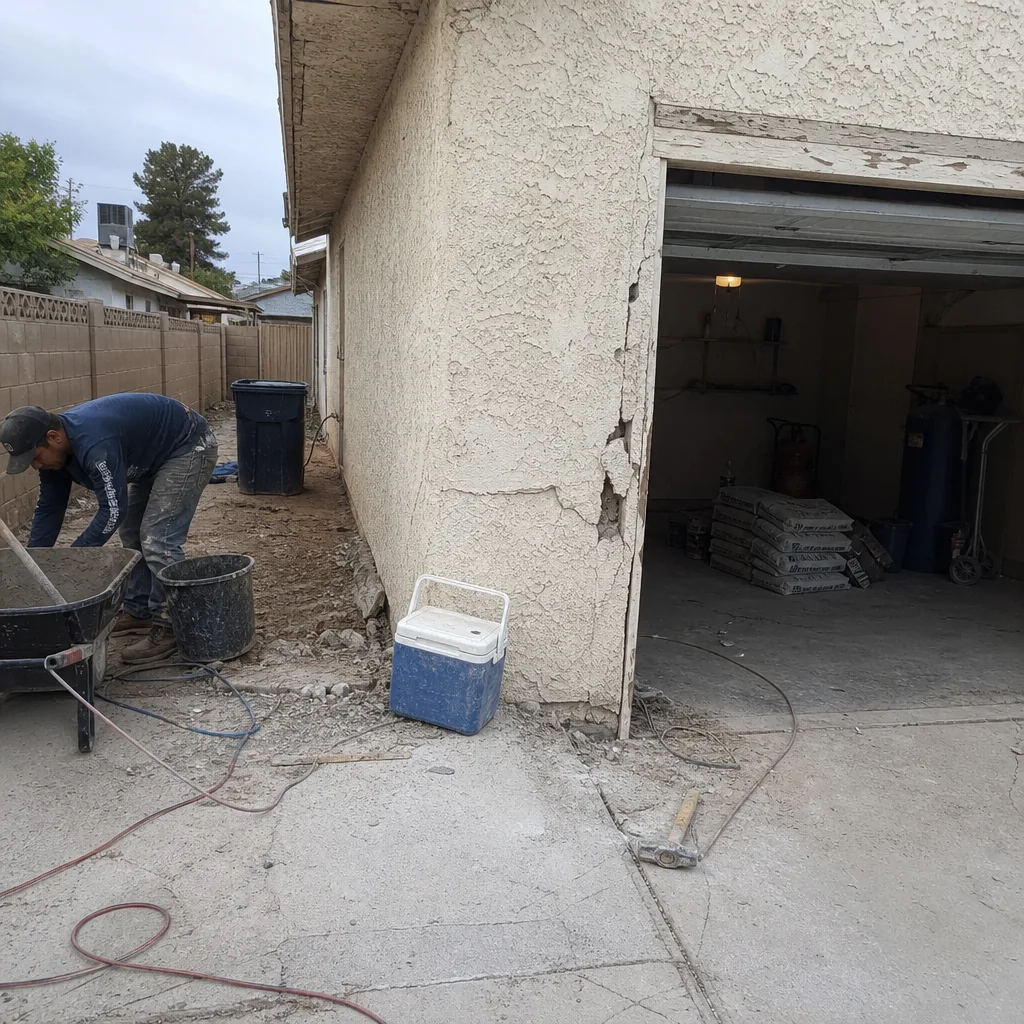 Before
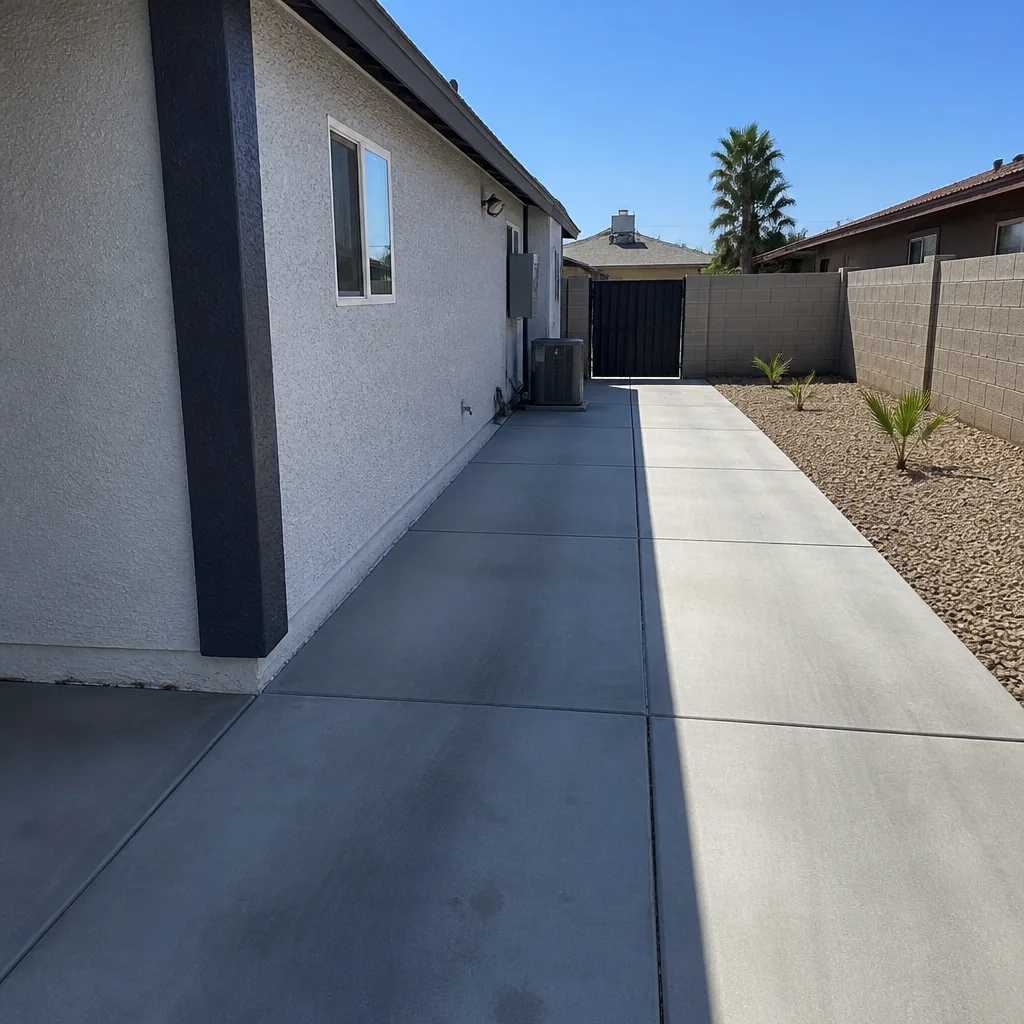 After
Frequently Asked Questions
The best time for roof work in Sunrise Manor is March through April, when daytime temperatures are cool enough for sealants and adhesives to cure properly. If you need roof work done, start the conversation in January or February so the work is on the calendar before the spring window closes and summer heat arrives.
Annual maintenance costs in Sunrise Manor depend on the scope. Basic DIY maintenance like sealant, caulk, and weatherstripping might run $100 to $300. A professional envelope assessment with caulking and minor sealing work typically runs in the low hundreds. Replacing a flat roof membrane or doing extensive stucco repair is measured in thousands. Call (877) 265-5715 for an exact assessment and written estimate, which is always free.
Start preparing in early May. The pre-monsoon window for sealing, caulking, and drainage work runs from early May through mid-June. By July, temperatures and humidity make exterior sealant work unreliable, and once monsoon storms arrive, any open gaps become active leaks.
Yes. Sunrise Manor gets hard freezes, and the failure modes are specific: frozen hose bibs that split pipes inside walls, irrigation lines that crack, and tile work that disbonds when trapped water freezes. Disconnecting hoses and checking irrigation before the first freeze costs almost nothing. The repairs it prevents can run into four figures.
You can, but you should not. Summer surface temperatures in Sunrise Manor exceed the maximum application temperature for most paints, sealants, and stucco products, which means the material cures too fast or fails to bond. If the work is scheduled for summer, ask your contractor how they are managing surface temperatures. A contractor who does not have an answer is not protecting the long-term performance of the finishes.
Inspect caulk and sealant lines annually in September or October, after the summer UV season. In this climate, caulk typically lasts three to five years before needing replacement. If you see cracking, peeling, or separation before that, the material failed early and should be addressed immediately rather than waiting for the next full inspection cycle.
The Bottom Line
Sunrise Manor home care is not a January-through-December calendar. It is a cycle built around two weather events that dominate everything else: the summer monsoon and the summer heat that precedes it. The pre-monsoon window in May and June is when your home gets protected. The post-summer window in September and October is when you assess what the heat destroyed. The spring window in March and April is when major work actually gets done, because the materials demand it. Miss these windows, and you are doing emergency work at higher cost with worse results. Hit them, and your home in Sunrise Manor stays sealed, dry, and structurally sound for decades. For a full envelope assessment or to plan work for the upcoming spring window, call Steel Horse Construction at (877) 265-5715. The estimate is free, and the timing advice costs nothing at all.
Written by the team at Steel Horse Construction, serving Sunrise Manor since 2016.