
Last updated October 31, 2026
 Home additions & ADU
 Kitchen remodeling
 Bathroom remodeling
 Roofing
 Windows & doors
 Driveway & pavers
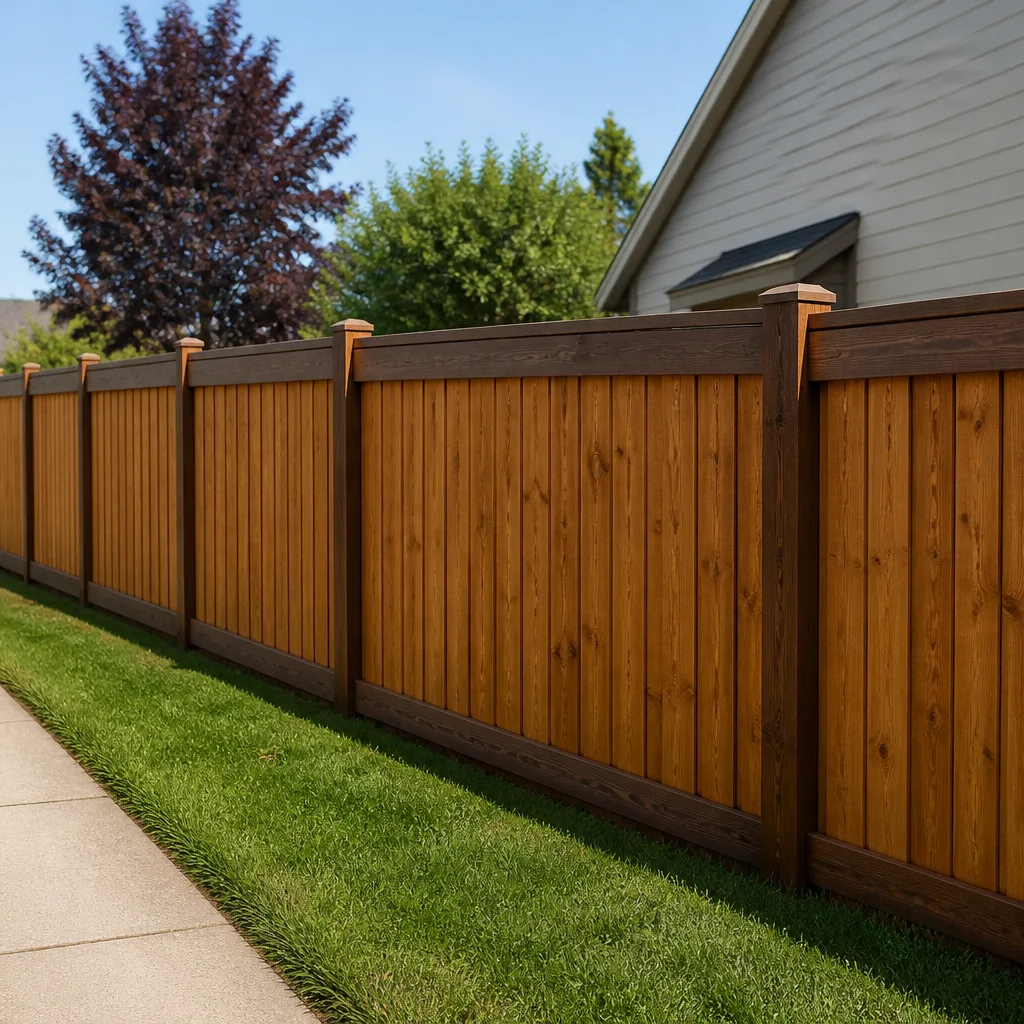 Fence
Free written scope consultation - allowances, timeline, and change-order rules on paper before a single trade is scheduled
Construction Emergency Preparedness Guide for Sunrise Manor Homes
The most dangerous hour for a Sunrise Manor home isn’t during a storm. It’s the 72 hours after one ends, when hidden moisture behind stucco and under roofing membranes begins growing mold in a thermal environment that accelerates every biological process. A roof that looks intact from the street can be quietly failing from the inside, and by the time water stains appear on a ceiling, the damage is already measured in thousands of dollars. This guide walks through the actual emergencies Sunrise Manor produces: monsoon-driven roof failures, summer heat envelope breaches, and flash flood events that overwhelm drainage systems built before current code. For Construction Permits, Codes & Inspections in NV: What You Need to Know, see our dedicated resource. You’ll learn what to inspect, in what order, what you can safely handle yourself, and when the only smart move is picking up the phone.
Quick Answer
A construction emergency preparedness plan for a Sunrise Manor home starts with three things: a pre-season inspection of your roof, windows, and drainage before monsoon season hits in July, a documented relationship with a licensed general contractor you can call at the first sign of trouble, and a step-by-step triage protocol for the 72 hours after any storm or extreme heat event. For additional preparation strategies, read our Construction Warning Signs: A Sunrise Manor Homeowner’s Reference Guide. The homeowners who fare best after a desert construction emergency are the ones who already know what they’re looking at, know how to document it for insurance, and know exactly who to call when temporary fixes aren’t enough.
Styles & brands we work with
Table of Contents
- The Sunrise Manor Emergency Calendar
- Post-Monsoon Triage: What to Inspect First
- Temporary Weatherproofing You Can Do Safely
- Insurance Documentation Protocol for Desert Storm Claims
- Why a Pre-Season Contractor Relationship Matters
- Summer Heat Event Envelope Breach Response
- Rare Freeze Event Pipe and Irrigation Triage
- Drainage Systems: The Overlooked Emergency Multiplier
The Sunrise Manor Emergency Calendar
Sunrise Manor doesn’t experience four seasons the way most of the country does. We experience three distinct emergency windows, and each one stresses a different part of a home’s envelope. Knowing which window you’re in tells you what to watch, what to pre-stage, and what type of contractor call you’re likely to make.
Monsoon Season: July Through September
Monsoon season in Sunrise Manor is when the bulk of construction emergency calls happen. These storms arrive fast, dump significant water in a short window, and bring wind gusts that test roofing materials in ways the other nine months never do. The failures we see most often during monsoon season are:
- Roof membrane breaches at flashing points around vents, skylights, and HVAC penetrations
- Wind-driven rain intrusion through window and door seals that have dried and cracked in the desert heat
- Stucco cracking that lets water migrate behind the exterior finish and into framing
- Drainage overload where downspouts and yard drains can’t keep up with sudden volume
The critical preparation window for monsoon season is May and June. That’s when roof inspections catch the compromised flashing and worn sealant that will fail under storm conditions. A general contractor in Sunrise Manor who knows this climate will spend those months doing pre-monsoon envelope checks, not waiting for the first storm to expose weaknesses.
Summer Heat Events: June Through August
A Sunrise Manor summer heat event isn’t just an inconvenience; it’s a structural stress test. When outdoor temperatures push past 110°F, attic spaces can reach 160°F or higher. That kind of heat breaks down roofing underlayment, causes window seals to fail, and can push an aging HVAC system past its limits. A heat event envelope breach looks different from a monsoon failure:
- Asphalt shingle curling and lifting at edges
- Window seal failures showing as fogging between panes
- Expansion cracks appearing in stucco and concrete
- Cooling loss from duct gaps and poorly sealed attic access points
Heat emergencies are slower-moving than storm emergencies, but the damage accumulates. A home that goes through three consecutive 110°F weeks with a compromised envelope will show the effects in energy bills, indoor air quality, and ultimately in the structural materials themselves.
Rare Freeze Events: December Through February
Sunrise Manor freeze events are infrequent, which makes them more dangerous. Homes here are not built with extended freezing temperatures in mind. When a hard freeze hits, the first casualties are exterior pipes, irrigation systems, and any plumbing run through uninsulated exterior walls. The damage often doesn’t show until the thaw, when cracks in pipes and fittings reveal themselves as leaks.
Preparation for a freeze event is simple and cheap: know where your main water shutoff is, know which exterior hose bibs need covers, and have a plan for draining irrigation lines if temperatures drop below 28°F for more than a few hours.
Post-Monsoon Triage: What to Inspect First
After a monsoon storm passes through Sunrise Manor, the first 72 hours determine the difference between a contained repair and a full-scale remediation. Water moves fast in the desert heat, and mold growth begins within 24 to 48 hours when moisture is trapped in warm, dark cavities. Here is the inspection sequence we recommend for any Sunrise Manor homeowner after a significant storm.
Step 1: Interior Ceilings and Walls
Start inside, not outside. The interior tells you immediately whether water has breached the envelope. Walk every room and look for:
- Discoloration or staining on ceilings, especially around light fixtures and vent penetrations
- Bubbling or peeling paint on walls and ceilings
- Soft spots when you press gently on drywall
- Damp smells that weren’t there before the storm
Move furniture away from any area showing signs of water. Place buckets or towels under active drips, and if a ceiling is sagging visibly, stay out of that room and call a contractor immediately. A sagging ceiling can hold hundreds of pounds of water and can collapse without warning.
Step 2: Roof Surface Assessment
From the ground, look for missing shingles, lifted flashing, and debris that may have punctured the roof surface. Do not climb onto a wet roof. A wet roof in Sunrise Manor after a monsoon is a slip hazard, and the heat from below makes the surface unstable. What you can see from the ground with binoculars is enough to identify whether a contractor call is warranted.
Signs that require a contractor call rather than self-remediation:
- Visible gaps in flashing around vents, chimneys, or skylights
- Shingles that have shifted or lifted in a pattern suggesting wind uplift
- Punctures from tree limbs or blown debris
- Water staining visible on soffits or fascia boards
Step 3: Window and Door Seals
Desert heat dries out window and door seals faster than manufacturers’ standard lifecycles anticipate. After a monsoon, check every window and exterior door for water intrusion. Look for water pooling on interior sills, damp carpet near door thresholds, and any sign that water wicked up into drywall around window frames. A failed seal that leaks during monsoon season will continue to leak during every subsequent storm until it’s replaced.
Step 4: Stucco and Exterior Walls
Walk the perimeter of your home and look for cracks in the stucco that are wider than a dime. Hairline cracks are normal in desert construction and rarely cause problems. Cracks wider than a dime, especially vertical cracks running from foundation to roofline, are pathways for water intrusion. After a monsoon, check whether any existing cracks have widened or whether new cracks have appeared. Water that gets behind stucco in a Sunrise Manor summer is trapped in a hot, enclosed space with organic material, and it doesn’t dry out on its own.
Step 5: Drainage and Grading
The last step in triage is checking how water moved across your property during the storm. Look for:
- Soil erosion patterns that show where water channeled
- Standing water anywhere on the property more than 24 hours after the storm
- Downspouts that disconnected or shifted during heavy flow
- Mulch, gravel, or debris piled against the foundation
Standing water against a foundation in Sunrise Manor is a problem that compounds quickly. The soil here expands and contracts dramatically with moisture changes, and repeated saturation of the soil around a foundation leads to settling, cracking, and structural movement over time.
Temporary Weatherproofing You Can Do Safely
When a roof fails at 9 PM on a Saturday during monsoon season, you can’t wait for a contractor to arrive with a ladder. There are temporary weatherproofing steps you can take safely, without climbing onto a wet roof or putting yourself at risk. Here’s what actually works, and what will make things worse.
Interior Containment First
The first and safest thing you can do is contain water from the inside. Move valuables out of the affected area. Place tarps or plastic sheeting over furniture. Use buckets for active drips, and if water is coming through a ceiling light fixture, turn off power to that circuit at the breaker box before doing anything else. Water and electricity don’t mix, and a wet light fixture is an electrocution hazard.
Exterior Roof Tarping Without Voiding Insurance
Roof tarping is a legitimate temporary measure, and insurance companies expect it. What they don’t expect is for you to climb onto a wet roof in the dark. Here’s the sequence that protects your claim and your safety:
- Photograph the damage from the ground before touching anything
- Document the date and time of the storm and the moment you noticed the leak
- If you can reach the damaged area safely from a ladder placed on stable ground, secure a tarp over the breach using furring strips or sandbags
- Keep every receipt for tarp, tape, and any other temporary repair materials
- Leave the tarp in place until a licensed contractor assesses the damage
Insurance adjusters are familiar with temporary tarping. It’s a reasonable mitigation measure, and your receipts for materials are reimbursable in most storm damage claims. What voids a claim is deferred mitigation: if you knew about a leak and did nothing, the resulting mold and structural damage becomes your responsibility.
Window Breach Sealing
If a window breaks during a monsoon storm, clear the glass from the interior side, wear heavy gloves, and cover the opening with plywood secured from the inside. Do not attempt to replace the window yourself. A temporary plywood cover stops the immediate water intrusion and keeps the interior secure until a contractor can assess whether the frame, flashing, and surrounding drywall need replacement along with the glass.
Water Intrusion Containment
Once water is inside the home, the goal shifts from prevention to containment. Use a wet/dry vacuum to remove standing water. Run fans and a dehumidifier in the affected area. Pull back carpet and padding if it’s saturated, and cut a small inspection hole in any drywall that’s visibly waterlogged. That inspection hole lets you see whether water is pooling in the wall cavity, which is where the real damage happens.
Insurance Documentation Protocol for Desert Storm Claims
The difference between a smooth insurance claim and a denied one in Sunrise Manor usually comes down to documentation sequence. Adjusters process claims based on evidence, not narrative, and the evidence has to be collected in the order the damage occurred. Here’s the protocol that gets desert storm claims processed without delays.
Photograph Everything in Sequence
Start with wide shots of the exterior before any close-ups. Then move to interior wide shots showing the affected rooms. Then photograph the specific damage points: the water stain on the ceiling, the missing shingle, the cracked window seal, the standing water in the yard. The wide-to-narrow sequence tells an adjuster the story of the event in the order it happened.
Timestamp and Geotag Every Image
Modern smartphones do this automatically if you don’t turn the feature off. Confirm that your camera app is embedding location and date data. If it isn’t, use a timestamp camera app. The adjuster needs to know that the damage happened during this specific storm, not during a previous one.
Document the Weather Event Itself
Screenshot weather alerts, radar images, and any National Weather Service warnings for your area. Note the time the storm started, when it peaked, and when the damage was first noticed. In Sunrise Manor, monsoon storms are well-documented by the weather service, and your timestamps will be cross-checked against official records.
Keep a Running Damage Log
Start a simple document and add to it as new information emerges. Log every new sign of damage as you find it, with date and time. Water damage reveals itself over days, and adjusters understand this, but only if you’ve documented the progression. A water stain that appears 48 hours after the storm is just as much storm damage as one that appears in the first hour.
Don’t Discard Anything Until the Claim Closes
Keep the damaged shingles, the broken window glass, the waterlogged drywall you cut out. All of it is evidence. Your insurance company may want to inspect materials to confirm the cause of the failure, and discarded materials can become a point of contention.
Why a Pre-Season Contractor Relationship Matters
The single most valuable preparation a Sunrise Manor homeowner can make is having a general contractor relationship on file before an emergency happens. This isn’t about service agreements or retainer fees. It’s about knowing who you’re going to call, knowing that they answer their phone during monsoon season, and knowing that they understand the specific construction realities of this climate and this home.
What to Confirm in Advance
When you establish a pre-season relationship with a contractor, confirm these specifics before you ever need emergency work:
- Emergency response protocol: How do they prioritize calls during monsoon season, and what’s a realistic response window for a non-life-threatening emergency?
- Licensing and insurance verification: Request their contractor license number and confirm it’s active with the Nevada State Contractors Board. Confirm liability insurance and workers’ compensation coverage.
- Scope of capability: A home emergency that starts as a roof leak can quickly become a drywall, insulation, and flooring problem. Confirm that your contractor handles the full envelope, not just one trade.
- Material brand access: When a window breaks or a fixture fails, you want replacement options, not whatever’s on the truck. Ask which manufacturers they source from. A contractor with access to brands like Kohler and Moen for plumbing fixtures and Delta for faucets and shower systems gives you genuine choice rather than a single-brand default.
- Insurance claim experience: Ask directly how they handle insurance work. Do they document the way adjusters expect? Do they coordinate directly with your insurer? The answer tells you how much of the claims burden will fall on you.
For Sunrise Manor homeowners, a home remodeling contractor in Sunrise Manor who has worked on homes in your specific neighborhood brings something an out-of-area contractor can’t: familiarity with the construction methods, drainage patterns, and failure points common to this part of the valley.
What Pre-Season Looks Like in Practice
A pre-season check with Steel Horse Construction in Sunrise Manor is straightforward, and you can find more guides & resources on our blog to stay prepared year-round. We walk the roof, check flashing and sealant, inspect window and door seals, verify drainage routing, and give you a documented baseline of your home’s current condition. That baseline matters. When a monsoon storm hits and something fails, we know what your home looked like before the storm, which makes post-storm assessment faster and more accurate.
A homeowner who has done their pre-season homework is the homeowner who gets their claim processed quickly and their repair prioritized. A homeowner calling a contractor cold for the first time during a monsoon event is competing with every other homeowner in the same situation, and the contractors who answer their phones are the ones who already have established relationships to service first.
Summer Heat Event Envelope Breach Response
A Sunrise Manor summer heat event moves slowly compared to a monsoon storm, but it damages differently. The failure mode isn’t sudden water intrusion. It’s material degradation, seal failure, and accumulating structural stress. Here’s how to respond when a heat event exposes a breach in your home’s envelope.
Identify the Breach Type
Heat event envelope breaches show up in predictable ways. The most common we see in Sunrise Manor are:
- Attic ventilation failure: Attic temperatures spike, shingle backing bakes, and underlayment degrades faster than it should
- Window seal failure: The gas between double panes expands and escapes, leaving fogged glass and compromised insulation value
- Duct leakage: Duct joints separate in extreme heat, pushing conditioned air into the attic instead of the living space
- Expansion cracking: Stucco and concrete expand enough to crack, creating future water intrusion pathways
Immediate Response Protocol
- Check your attic temperature during peak heat. If it’s above 140°F, your ventilation is likely inadequate or failing
- Feel around window frames and door thresholds for hot air intrusion. Seals that have failed let heat bleed into the home constantly
- Check your energy usage against the same month last year. A sudden spike without a corresponding temperature increase often points to envelope failure
- Look for new cracks in stucco, especially around window corners and roofline transitions
Heat event response is less urgent than storm response in the moment, but the timeline matters more than homeowners expect. A failed window seal that goes unreplaced through a full summer cycle lets heat and UV exposure degrade the surrounding frame, and the eventual repair becomes more extensive. A home renovation in Sunrise Manor that addresses heat-driven envelope breaches in the fall prevents the same failures from recurring next summer.
Rare Freeze Event Pipe and Irrigation Triage
Freeze events in Sunrise Manor are rare enough that most homes here are not built with serious freeze protection in mind. When temperatures drop into the 20s for extended periods, the damage follows a predictable pattern. Here’s the triage sequence.
Before the Freeze
- Locate your main water shutoff valve and confirm it turns freely
- Disconnect all garden hoses from exterior hose bibs
- Cover exposed exterior pipes and hose bibs with insulated covers or wrapped towels secured with duct tape
- Drain irrigation lines if the freeze is expected to last more than a few hours
- Open cabinet doors under sinks on exterior walls to let warm interior air circulate around plumbing
After the Thaw
- Turn on exterior hose bibs slowly and check for leaks at the connection point and along the wall
- Inspect irrigation valves, backflow preventers, and any exposed pipe for cracks
- Run each irrigation zone briefly and watch for uneven pressure, which indicates a cracked line
- Check interior pipes under exterior-wall sinks for slow drips that indicate freeze damage
Freeze damage in Sunrise Manor is often hidden until the first time a system is used after the thaw. Irrigation systems are particularly vulnerable because they’re designed for this climate’s normal conditions, not for hard freezes. A cracked irrigation line may not show itself until the first spring watering cycle, wasting water and eroding soil around the foundation.
Drainage Systems: The Overlooked Emergency Multiplier
Most construction emergencies in Sunrise Manor that start with a storm end with a drainage problem. The roof holds, the windows hold, the stucco holds, and then the drainage system fails, sending water toward the foundation instead of away from it. Homes built before current drainage code requirements are especially vulnerable because they were designed for rainfall patterns that have changed over the decades.
What Current Code Requires
Modern drainage requirements for Clark County homes specify slope away from the foundation, minimum downspout extensions, and in many cases, subsurface drainage systems for homes on sloped lots or in flood-prone areas. Homes built before these requirements were codified often have downspouts that discharge directly at the foundation and yard grading that has settled over time into a reverse slope.
What to Check Before Monsoon Season
- Downspout extensions: do they carry water at least five feet from the foundation?
- Yard grading: does the ground slope away from the house in all directions, or are there flat spots where water pools?
- Foundation vents: are they clear of debris and positioned above grade level?
- Window wells, if present: do they have functioning drains?
Drainage correction is one of the most common pre-monsoon projects we handle for Sunrise Manor homeowners. It’s unglamorous work, often involving regrading, extending downspouts, and occasionally installing subsurface drainage, but it prevents more emergency calls than any other single intervention.
Common Mistakes to Avoid
- Climbing onto a wet roof after a storm. Monsoon rain on a hot Sunrise Manor roof creates a surface as slick as ice. The damage assessment can wait until the roof dries, and a contractor with the right equipment can do it safely.
- Deferring mitigation because the insurance adjuster hasn’t arrived yet. Insurance policies require you to mitigate ongoing damage immediately. Document what you’re doing, but do it. Waiting for an adjuster to approve tarping a roof breach is a claim killer.
- Assuming a small water stain is a small problem. A water stain on a ceiling in Sunrise Manor means water has already penetrated the roofing membrane, saturated insulation, and is now showing through the drywall. By the time it’s visible, the damage is broader than the stain.
- Ignoring drainage problems because they don’t look like emergencies. Standing water against a foundation after every storm is an emergency in slow motion. The soil movement it causes leads to structural problems that cost far more than drainage correction ever would have.
- Calling a specialty trade before a general contractor for complex damage. A monsoon failure that involves the roof, a window, and interior drywall needs a single point of coordination, not three separate trade calls. A full-scope general contractor manages the entire sequence from weatherproofing to final paint.
- Not knowing where your main water shutoff is until you need it. A burst pipe from a rare freeze event becomes a flood when you can’t find the shutoff. Know where it is and confirm it works before an emergency happens.
- Using the wrong temporary repair materials. Duct tape is not a roof repair product. Using the wrong materials for temporary weatherproofing can cause additional damage and complicate your claim. Stick with proper tarp, furring strips, and plywood.
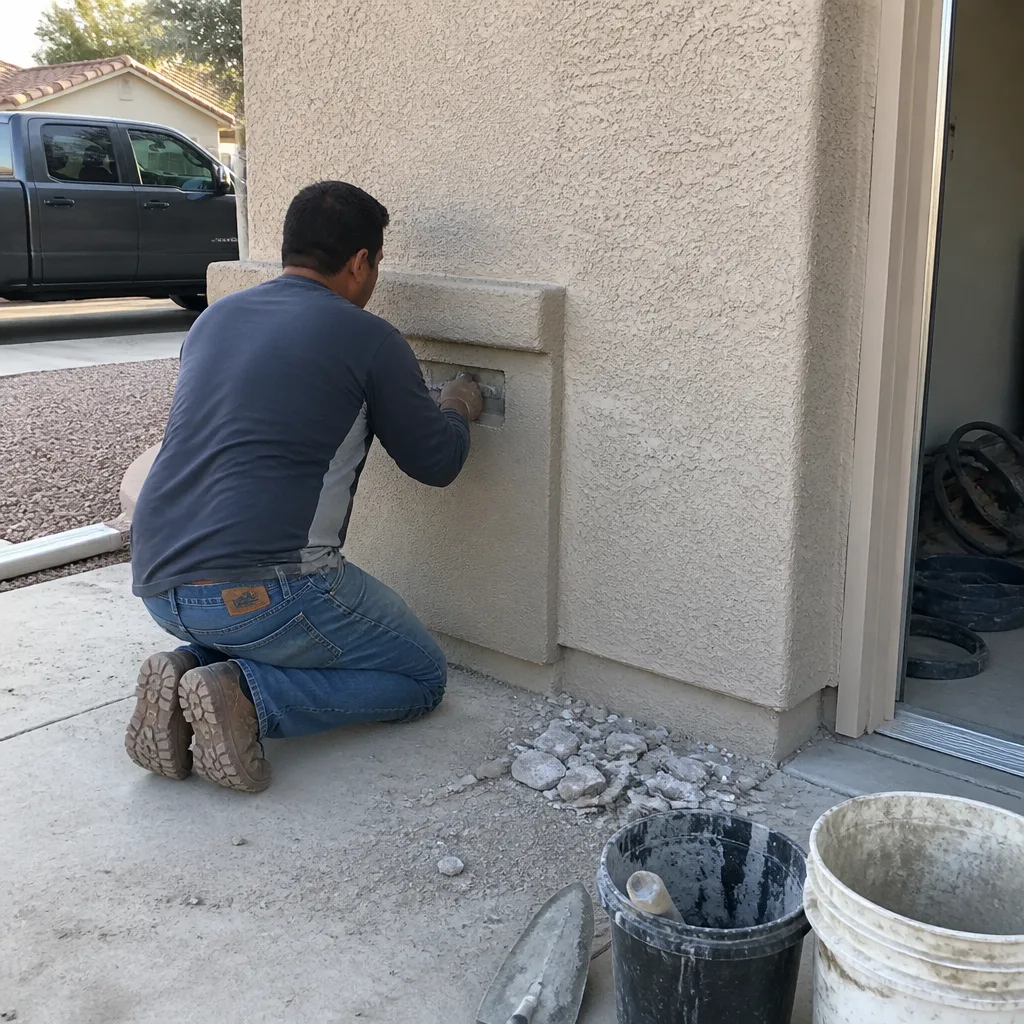
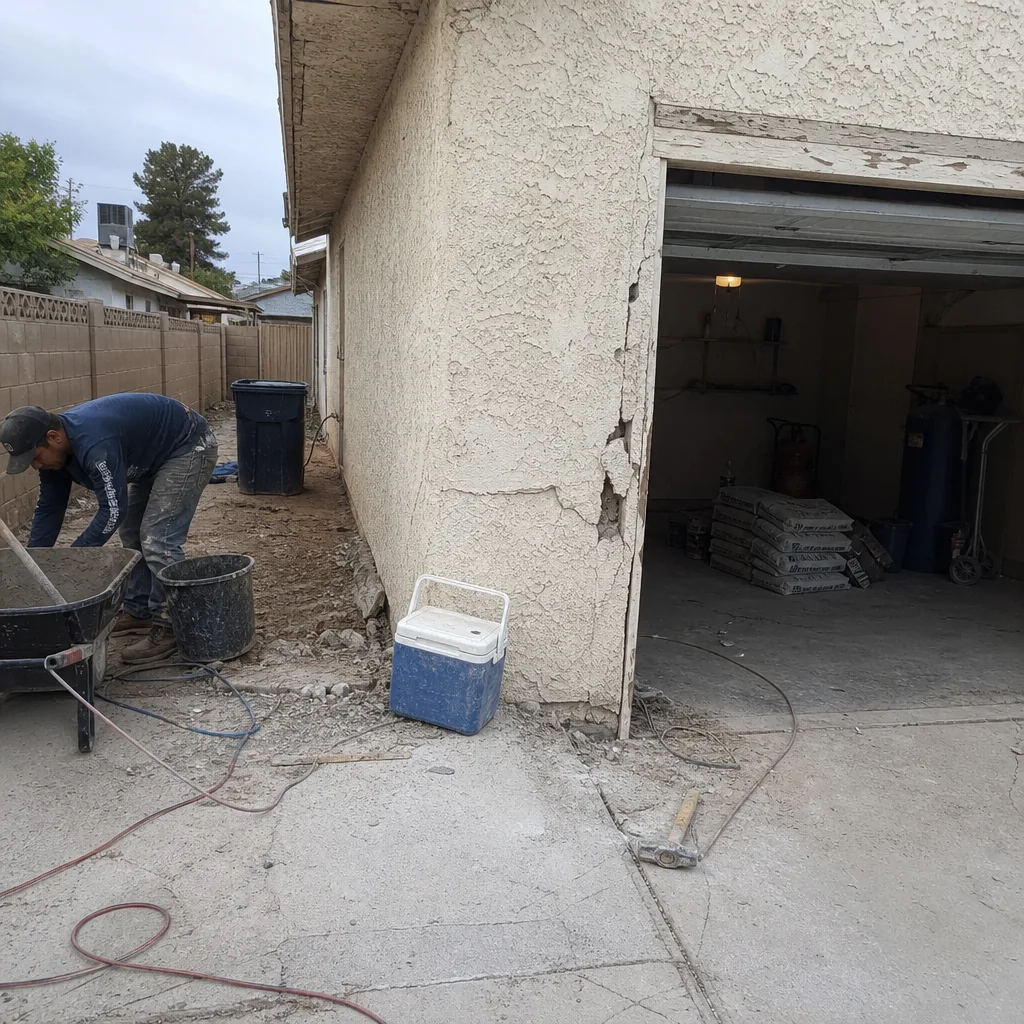
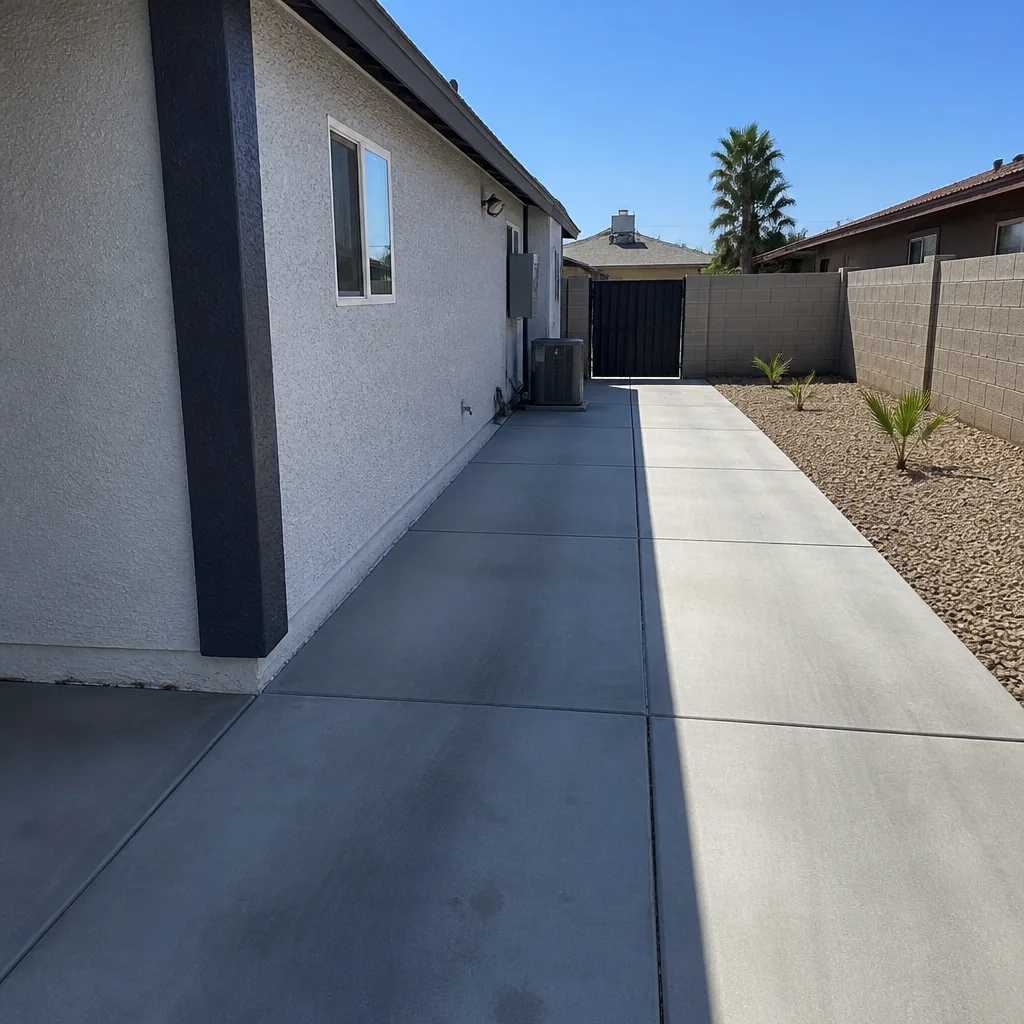
See the difference
 Before
 After
 Before
 After
 Before
 After
When to Call a Professional
Some construction emergencies are beyond safe self-remediation, and knowing the line is part of responsible homeownership. Call a licensed contractor immediately if you see a sagging ceiling, water coming through a light fixture, significant roof damage visible from the ground, a broken window frame with surrounding water intrusion, any sign of structural movement like new cracks in drywall or stucco wider than a dime, or standing water against your foundation after a storm. If you smell gas or suspect electrical damage, call the appropriate utility immediately and then a contractor once the immediate hazard is addressed. For any construction emergency in Sunrise Manor, Steel Horse Construction offers free estimates at (877) 265-5715. One call covers the full scope, from roof to foundation, and every brand we install, from Kohler and Moen plumbing fixtures to Delta faucets, is sourced through the same project team that handles the structural work. Your home is the project; everything else is details we handle.
Frequently Asked Questions
Emergency roof repair in Sunrise Manor typically runs between $450 and $1,200 for temporary tarping and weatherproofing, with permanent repairs ranging from $1,500 to $6,000 depending on the extent of damage and the roofing material involved. Monsoon season pricing reflects demand, so pre-season inspection and repair is always the cheaper path. Call (877) 265-5715 for a free estimate and a specific quote on your roof’s condition.
Most standard Nevada homeowner’s policies cover wind and rain damage from monsoon storms, including roof failures, water intrusion, and the resulting interior damage. What varies is your deductible and the documentation requirements. Photograph everything in sequence, log the timeline, and keep every receipt for temporary repairs. Some policies have separate wind and hail deductibles that apply specifically to storm events.
You should begin mitigation within 24 hours and schedule permanent repair within 7 to 14 days in Sunrise Manor’s climate. Mold growth begins within 24 to 48 hours when moisture is trapped in warm cavities, and the desert heat accelerates the process. Every day of delay adds remediation cost and complicates your insurance claim.
Permanent roof repairs that involve structural changes, replacement of more than a small section of roofing, or any modification to the roof structure require a permit through Clark County. Temporary tarping and weatherproofing do not. A licensed contractor handles permit pulling and inspection scheduling as part of the repair scope, which is one reason to use a full-scope general contractor rather than an unlicensed handyman for storm damage work.
The biggest construction risk specific to Sunrise Manor homes is the combination of monsoon rain and desert heat in the same season. Homes here experience severe drying and cracking for ten months of the year, then sudden, intense water events for two. That cycle exposes every weakness in a home’s envelope, and failures compound quickly. A crack that formed in June becomes a water intrusion pathway in August.
Yes. Steel Horse Construction functions as a single point of accountability from emergency weatherproofing through complete restoration, including roofing, stucco repair, window replacement, drywall, insulation, and finish work. We spec the brand that fits the job, from the structural materials to the finish fixtures, and one contract covers every phase. Call (877) 265-5715 to schedule a free estimate.
The Bottom Line
Sunrise Manor construction emergencies follow a pattern. Monsoon storms expose envelope weaknesses in July and August. Summer heat events degrade materials through June, July, and August. Rare freeze events threaten pipes and irrigation in December and January. The homeowners who prepare are the ones who schedule pre-season inspections, document their home’s baseline condition, know their insurance documentation protocol, and have a licensed general contractor on file before the first storm hits. The homeowners who don’t prepare are the ones paying for mold remediation, structural repairs, and extended displacement that could have been avoided. Preparation costs a few hundred dollars and a few hours of time. Reacting to an unprepared-for emergency costs thousands, takes months, and disrupts your life in ways that money can’t fully repair. Built to outlast the trends, ready for the storms that don’t wait.
Written by the team at Steel Horse Construction, serving Sunrise Manor since 2016. One contractor. Every phase. From roofline to foundation.