
Last updated October 31, 2026
 Home additions & ADU
 Kitchen remodeling
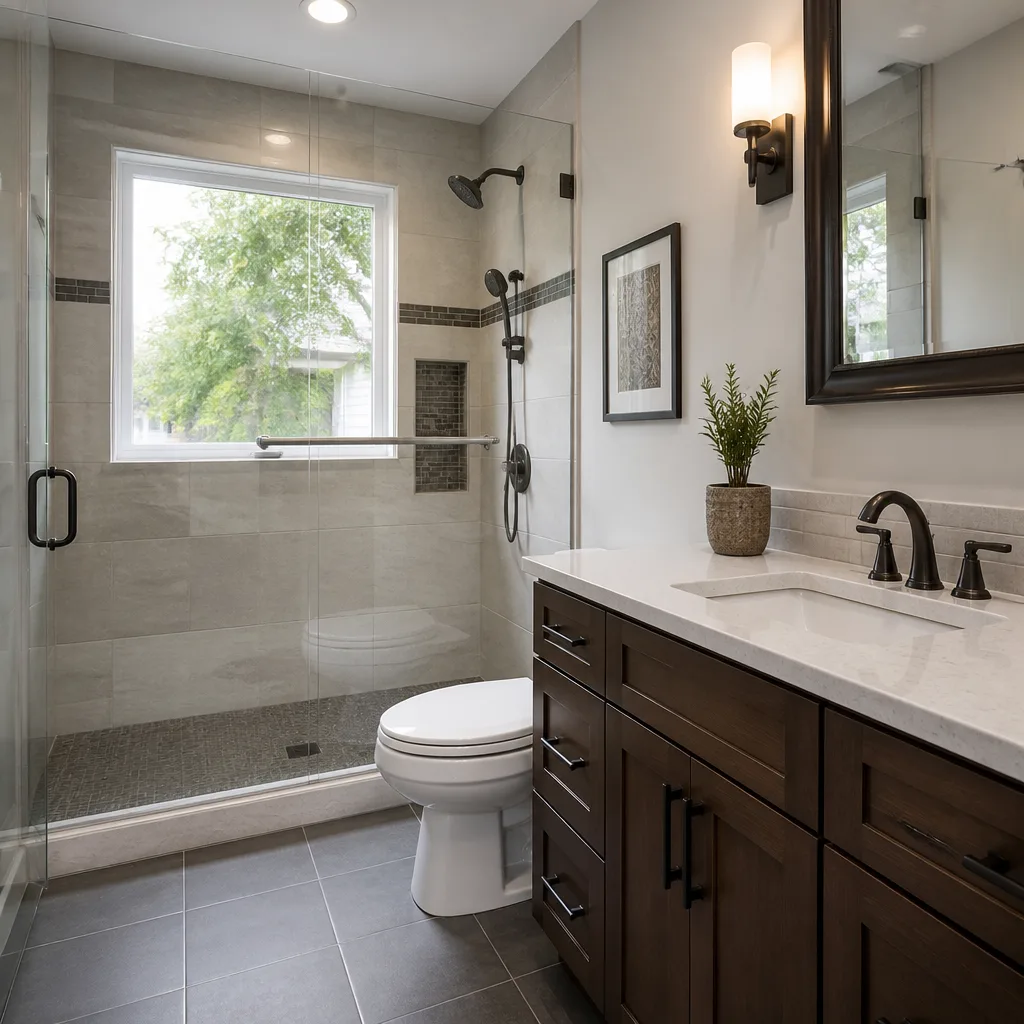 Bathroom remodeling
 Roofing
 Windows & doors
 Driveway & pavers
 Fence
Free written scope consultation - allowances, timeline, and change-order rules on paper before a single trade is scheduled
General Contractor Maintenance Checklist for Sunrise Manor Homeowners
The most expensive repair call a general contractor gets in Sunrise Manor isn’t from a monsoon storm ripping off a roof or a pipe bursting in the middle of the night. It’s from a homeowner who skipped a $40 tube of caulk three years ago and now owes $12,000 in water-damaged framing, rotted sheathing, and mold remediation behind a stucco wall. The desert doesn’t announce itself. It works slowly, through UV radiation, wind-driven dust, and soil that expands and contracts on its own schedule. This guide is built from what we see when we’re called in after years of skipped maintenance, and it will walk you through the exact failure points, the seasonal timing, and the documentation habits that keep a Sunrise Manor home from becoming someone’s cautionary tale.
Styles & brands we work with
Quick Answer
A home maintenance checklist for Sunrise Manor homeowners must be timed around two weather windows: pre-monsoon prep in May and June, and post-summer UV inspection in September. Prioritize the five exterior penetrations that fail first in desert heat, including HVAC boots and window weep holes, inspect hardscape for caliche-driven concrete movement, and document everything you repair so warranty claims and insurance adjustments don’t stall when you actually need them.
Table of Contents
- The Sunrise Manor Seasonal Maintenance Calendar
- The Five Exterior Penetrations That Fail First in Desert Heat
- Hardscape and Concrete: Reading Caliche Soil Movement Before It Costs You
- Interior Maintenance Items a General Contractor Catches That Homeowners Skip
- Documentation Habits That Protect Warranties and Speed Insurance Claims
- Material Choices That Reduce Maintenance in Sunrise Manor
- Common Mistakes to Avoid
- When to Call a Professional
- Frequently Asked Questions
- The Bottom Line
The Sunrise Manor Seasonal Maintenance Calendar
Sunrise Manor sits in the Las Vegas Valley’s northeastern edge, where the Mojave Desert doesn’t soften its approach. Summer temperatures routinely cross 105°F, monsoon season drops sudden, violent rain between July and September, and winter nights dip below freezing just often enough to matter. A maintenance calendar built for this climate doesn’t spread tasks evenly across twelve months. It concentrates work into two critical windows: pre-monsoon, before the storms hit, and post-summer, after UV radiation has done its worst.
Pre-Monsoon Window: May through June
This is the window that prevents most of the water damage we repair in Sunrise Manor. The ground is dry, roofs are accessible, and caulk cures properly in warm, low-humidity air. The tasks below are ordered by the cost of ignoring them.
- Inspect and reseal all roof penetrations. Pipe boots, vent stacks, skylight flanges, and HVAC curbs are the first points of failure. The rubber and sealant on these components degrade faster in the Las Vegas sun than they do almost anywhere else in the country.
- Clean and test all drainage paths. This includes gutters if you have them, but more importantly, the grading around your foundation, the channel drains in your hardscape, and the scuppers on flat or low-slope roofs common to Sunrise Manor homes.
- Check window and door perimeter seals. Monsoon rain in the desert doesn’t fall straight down. It comes sideways with 40 mph wind, and it will find any gap that faces east or south.
- Inspect stucco control joints and exterior caulk lines. The intense dry heat of May and June opens up cracks that were invisible in March. Seal them before the first storm, not after.
- Test your sump pump or exterior drainage if you have one. Most Sunrise Manor homes don’t have basements, but many have below-grade entries, window wells, or courtyard drains that back up exactly when you need them functioning.
Post-Summer Window: September
By September, the monsoon has come and gone, and the UV index has been baking every exposed surface for four straight months. This window is about damage assessment and preventing winter’s freeze-thaw cycle from making small cracks bigger.
- Re-inspect every seal you checked in May. Even properly applied caulk can fail in a single summer. Look for shrinkage, cracking, and areas where dust has accumulated inside a bead, a sign the seal has opened.
- Check for monsoon damage at grade level. Look for soil erosion around the foundation, silt deposits that redirect water toward the house, and any new cracks in concrete flatwork that appeared after the first heavy rain.
- Inspect attic ventilation. September is when we find blocked soffit vents, dead exhaust fans, and insulation that shifted during summer heat expansion. Your attic should be venting hot air, not holding it.
- Test all exterior lighting and GFCI outlets. Summer dust storms coat electrical contacts with fine particulate. A GFCI that trips once and resets is fine. One that trips repeatedly signals moisture intrusion or failing components.
- Prepare for winter’s occasional freeze. Insulate exposed exterior pipes, drain irrigation systems that won’t be used, and check that your water heater’s pressure relief valve is functioning.
The Five Exterior Penetrations That Fail First in Desert Heat
Every hole cut through your home’s exterior envelope is a potential leak. In Sunrise Manor, where summer surface temperatures on south-facing walls can exceed 150°F, five specific penetrations fail predictably and repeatedly. We’ve repaired all five, multiple times, on homes throughout Sunrise Manor. Here’s what goes wrong and what to look for.
1. HVAC Boots
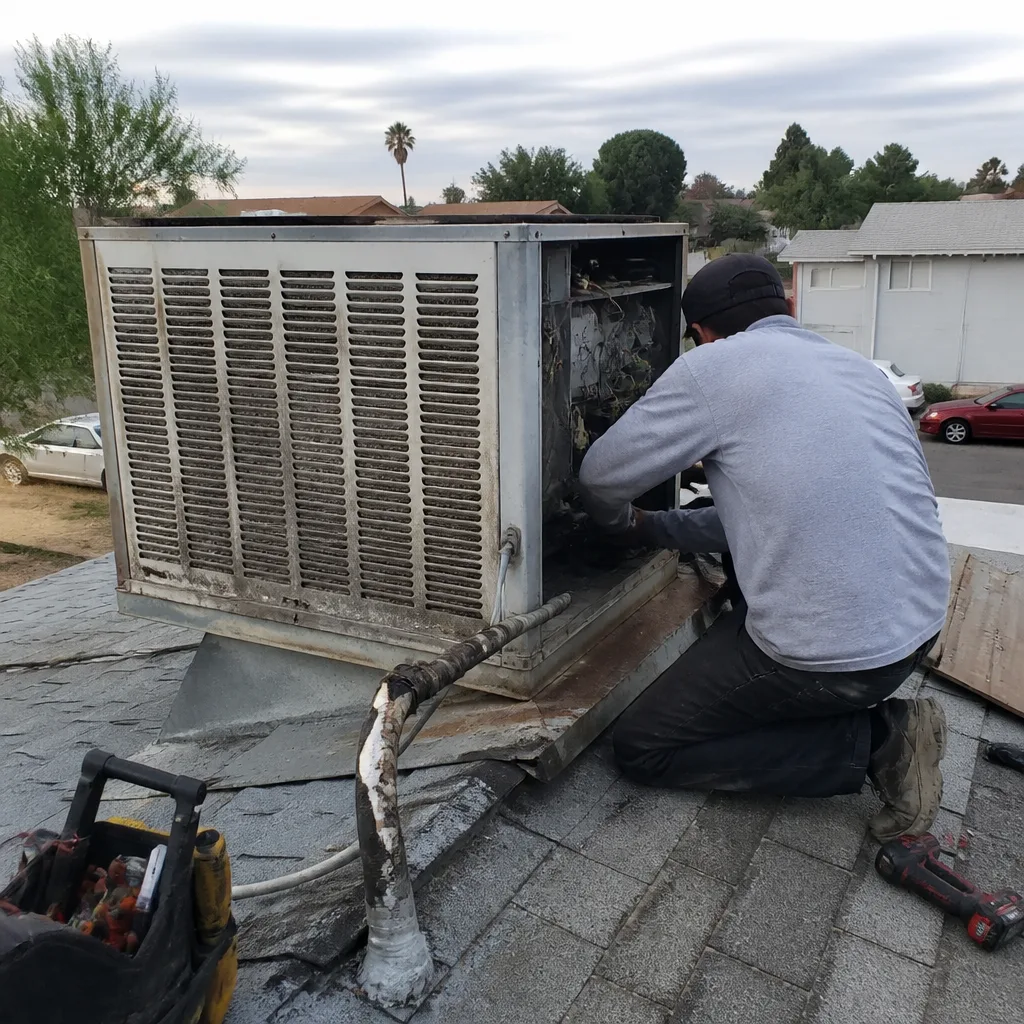
The rubber boot that seals the refrigerant lines and electrical conduit where they pass through your exterior wall is exposed to direct sun, extreme heat, and ozone. It cracks, shrinks, and pulls away from the stucco. Once that seal fails, water follows the line set straight into your wall cavity, and because it enters behind the stucco, you won’t see water staining on the interior wall for months or years. Check these boots every spring. If the rubber is stiff, cracked, or pulling away from the wall, replace the boot and re-seal the penetration with a UV-stable elastomeric sealant. This is a $30 repair that prevents a $3,000 repair.
2. Skylight Flanges
Skylights on Sunrise Manor homes take a beating. The curb-mounted flashing that works fine in a temperate climate fails faster here because the sealant between the flashing and the roof membrane breaks down under constant UV load. Flat roofs, which are common on mid-century and ranch-style homes in this part of the valley, hold water longer after a monsoon storm, which gives any small flange leak more time to do damage. Check for water staining on the drywall around the skylight shaft, and inspect the roof-side flashing for lifted edges, cracked sealant, and rust on metal components.
3. Chimney Step Flashing
Chimneys are one of the most common leak sources we find, and in Sunrise Manor, the failure is usually a combination of two desert-specific factors: the metal step flashing expands and contracts daily with the temperature swing, and wind-driven dust abrades the sealant where flashing meets masonry. Over time, the step flashing pulls away from the chimney face, and water follows the gap straight down into the roof deck. If you have a chimney, inspect the flashing annually. If the sealant is chalky, cracked, or missing in sections, have it re-sealed before monsoon season.
4. Window Weep Holes
Most homeowners in Sunrise Manor have never heard of window weep holes, but they’re critical to the health of your window frames. Weep holes are small openings at the bottom of the window frame that allow condensation and rain water that gets past the sash to drain outside instead of pooling inside the frame. Desert dust, spider webs, and hardened debris clog these holes regularly. When they’re blocked, water collects inside the frame, corrodes the hardware, and eventually rots the wooden components of even vinyl windows. Clean weep holes with a small brush or compressed air every spring and fall. This is a five-minute inspection that prevents complete window frame replacement.
5. Stucco Control Joints
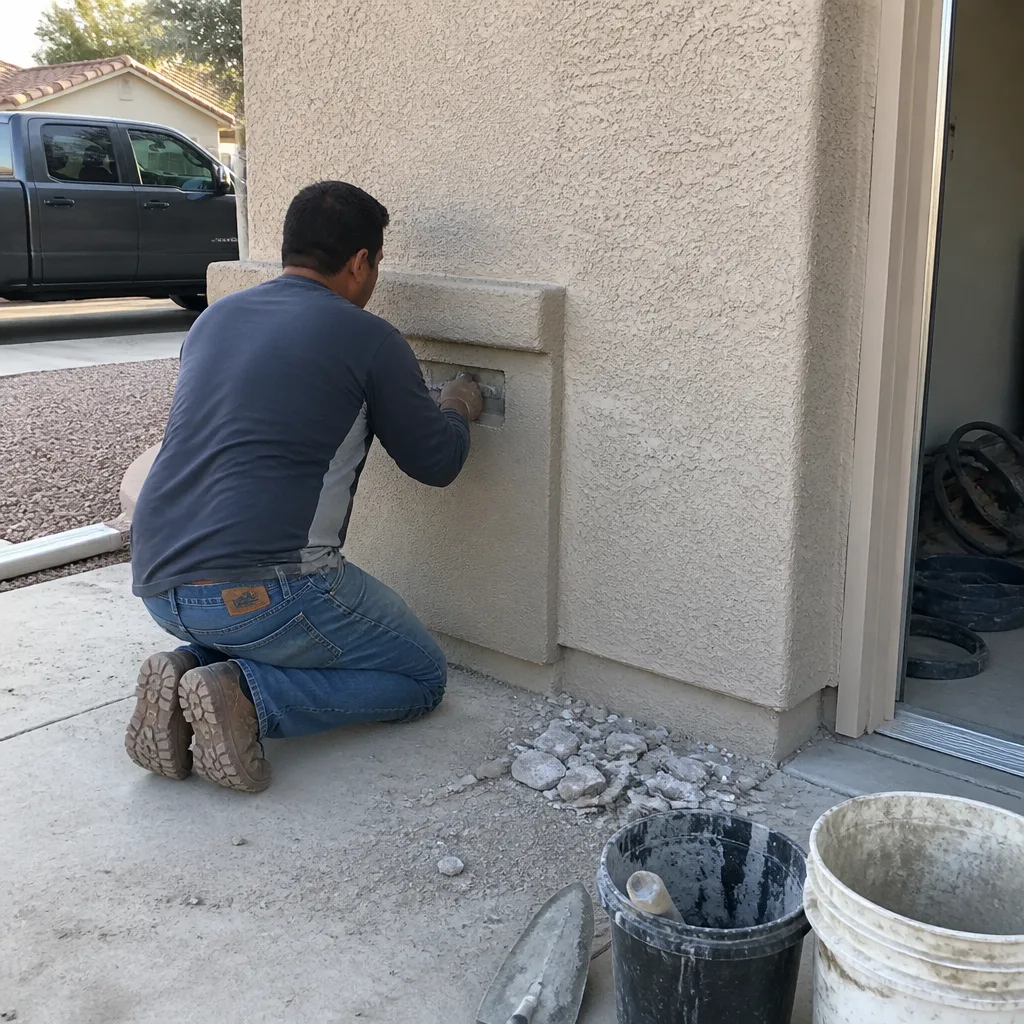
Stucco is the dominant exterior cladding in Sunrise Manor, and its Achilles heel is the control joint. These are the vertical or horizontal grooves cut into the stucco to allow for expansion and contraction, and they’re sealed with a flexible material that is supposed to move with the building. In the desert, that sealant dries out and cracks faster than anywhere else because it’s exposed to extreme daily temperature swings. When a control joint seal fails, water gets behind the stucco and sits against the weather-resistant barrier. Over years, this damages the barrier, then the framing. Inspect control joints at least twice a year and re-seal any that show cracks, shrinkage, or separation.
Hardscape and Concrete: Reading Caliche Soil Movement Before It Costs You
Sunrise Manor sits on soil with significant caliche content, a hardened layer of calcium carbonate that forms irregularly beneath the surface. Caliche doesn’t absorb or release water the way normal soil does, and this creates a specific failure pattern in concrete flatwork and hardscape that looks different from what you’d see in most other parts of the country. Understanding those patterns helps you distinguish between normal settling, which is cosmetic, and foundation movement, which is structural and expensive.
What Caliche Does to Concrete
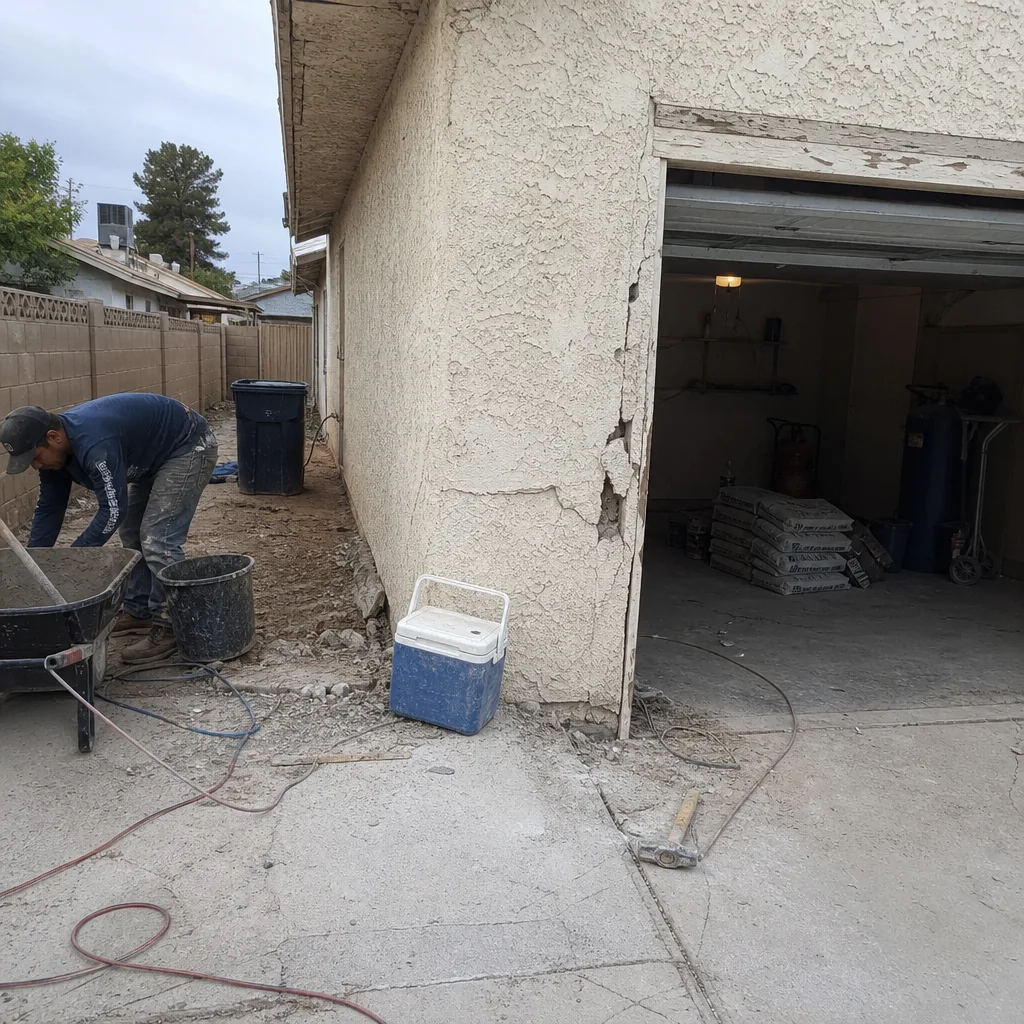
Caliche expands and contracts differently than the surrounding soil. When it gets wet during monsoon season, it can soften and lose bearing capacity. When it dries out, it hardens again. This cycle creates differential movement, where one part of a concrete slab is supported by one soil condition and the adjacent part is supported by another. The result is often a crack that runs diagonally across a patio, walkway, or driveway, or a slab edge that lifts relative to its neighbor.
Cracking Patterns: Cosmetic vs. Structural
- Hairline cracks under 1/8 inch wide are almost always cosmetic shrinkage cracks. They appear in the first year and don’t get wider. Seal them to prevent water intrusion and move on.
- Cracks between 1/8 inch and 1/4 inch wide with no vertical displacement on either side are typically normal settling. Monitor them. If they don’t grow over a full year, they’re stable.
- Cracks with vertical displacement of 1/4 inch or more, where one side of the crack is higher than the other, signal differential movement. This is a red flag that deserves professional evaluation.
- Cracks radiating from corners of the home’s foundation or running parallel to the exterior wall within the first three feet are the most concerning. These can indicate that caliche is failing under the footing itself.
Drainage and Hardscape Interaction
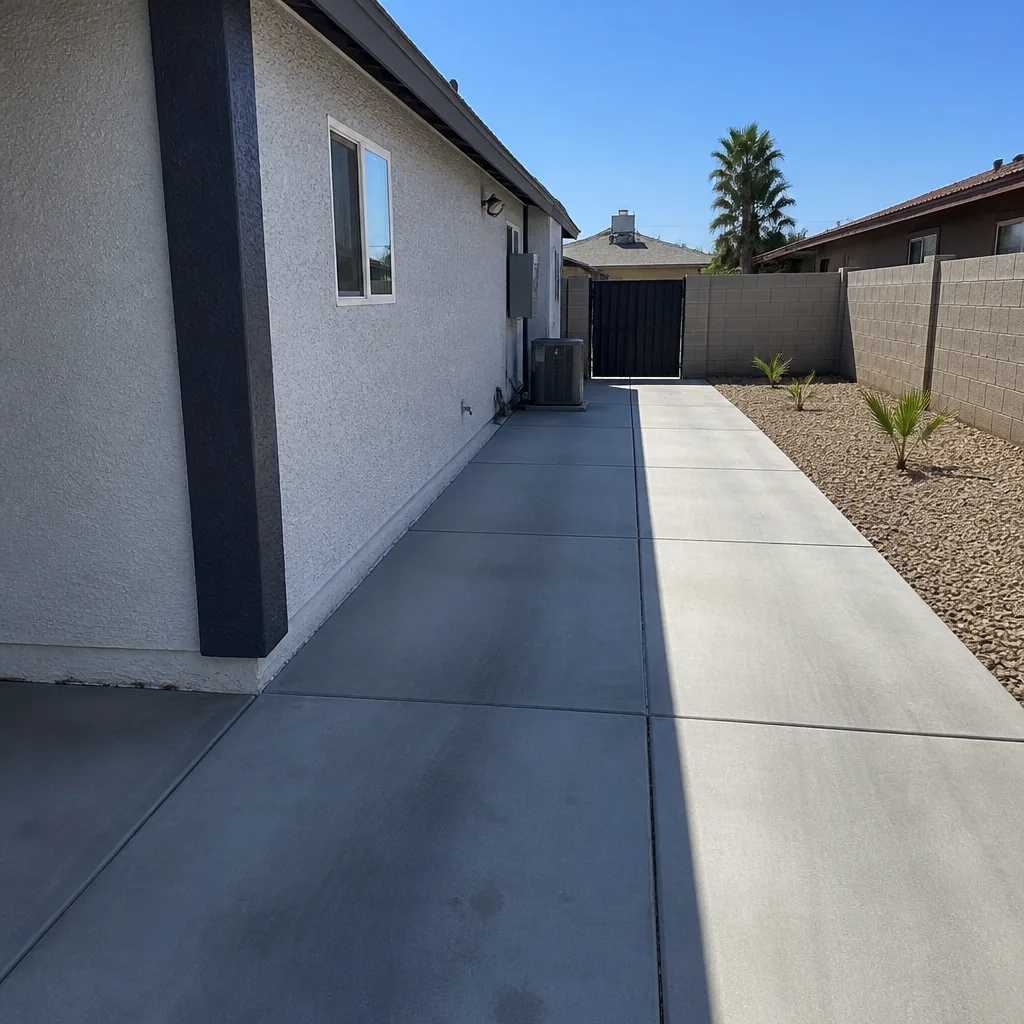
One of the most common issues we see in Sunrise Manor is hardscape that looks fine but is quietly directing water toward the foundation. Patios and walkways settle and slope differently than they were designed, and over five to ten years, the slope can reverse enough that monsoon runoff flows toward the house instead of away from it. Every fall, take a hose and run water across your patio and walkways. Watch where it goes. If it pools against the foundation or flows into window wells or below-grade entries, the hardscape needs adjustment or a channel drain needs to be added.
Interior Maintenance Items a General Contractor Catches That Homeowners Skip
Most homeowner maintenance checklists focus on what’s visible: leaky faucets, clogged drains, drafty windows. The items below are what we find when we walk through a Sunrise Manor home that hasn’t had a professional inspection in years. They’re invisible until they’re not, and by the time they become visible, they’ve usually already caused damage.
Attic Ventilation Blockage
Your attic ventilation system relies on intake vents at the soffits and exhaust vents at the ridge or roof surface. When the soffit vents get blocked by insulation, dust accumulation, or even bird and rodent activity, the system stops moving air. In a Sunrise Manor summer, attic temperatures can climb from a normal 130-140°F to 160°F or higher. That excess heat radiates into the living space, drives up cooling costs, and shortens the life of your roof. Check soffit vents at least twice a year. If you can’t see daylight through them from inside the attic, they’re blocked.
Range Hood Backdraft Dampers
The flapper-style damper in your range hood exhaust is designed to open when air flows out and close when air tries to flow in. In the desert, these dampers get coated with grease and dust, and they stop closing completely. The result is hot summer air pouring into your kitchen through the range hood, along with dust and sometimes insects. Clean the damper and the exterior hood vent annually. If the damper is warped or the spring mechanism has failed, replace the unit.
Bathroom Exhaust Termination Points
Bathroom exhaust fans in Sunrise Manor homes are often terminated in the attic rather than through the roof or a side wall. If you have a fan that terminates in the attic, you’re pumping warm, moist air into a space that is already hot and dry in summer. That moisture condenses on the underside of the roof sheathing, leading to mold growth and wood rot over time. Every bathroom exhaust fan should terminate outside the building envelope. Check where your fan duct goes. If it ends in the attic, it’s a code violation and a maintenance fail.
Water Heater Pressure Relief Valves
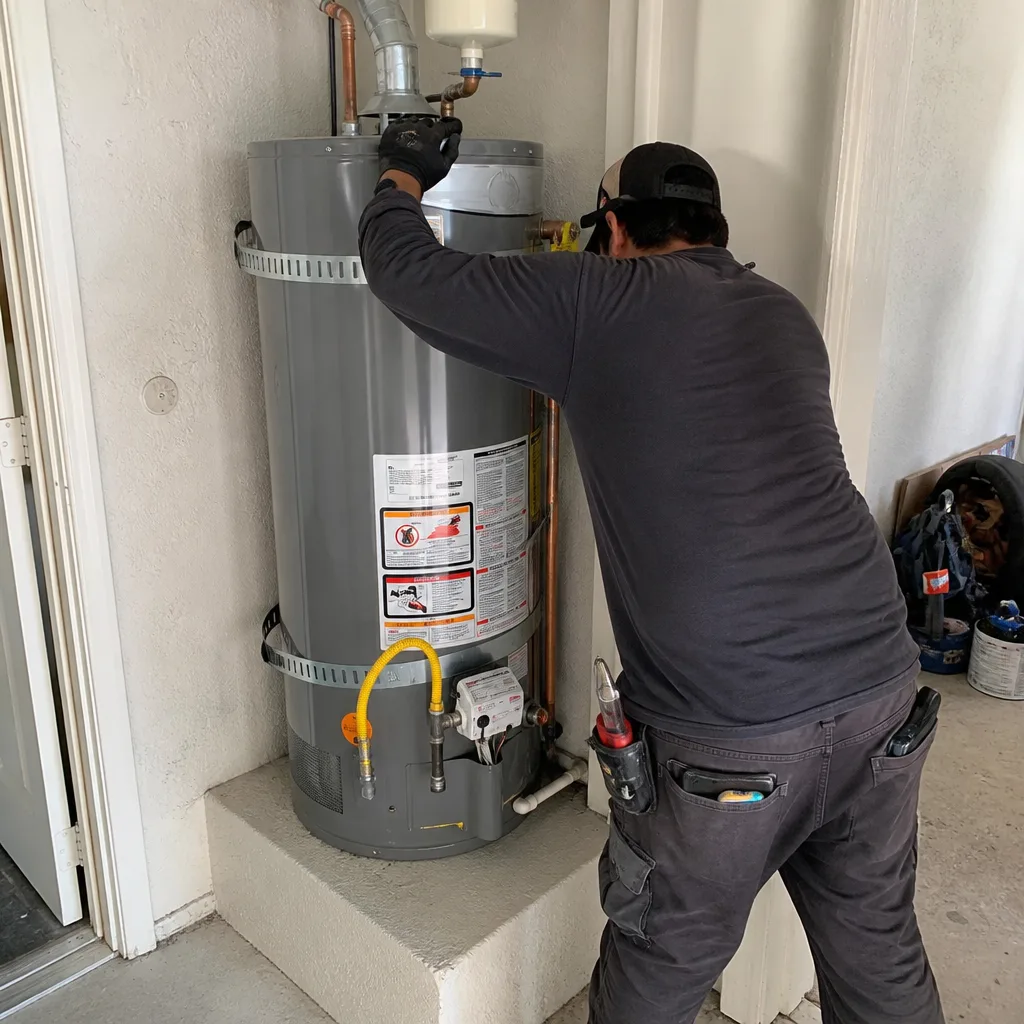
Your water heater’s pressure relief valve is a safety device that releases water if pressure inside the tank exceeds safe levels. In a desert utility closet, these valves get stiff with mineral deposits from the hard water common to the Sunrise Manor area. A valve that doesn’t open when it should turns your water heater into a potential explosive device. Test it once a year by lifting the lever briefly. If water doesn’t flow, or if it doesn’t reseat properly after testing, replace the valve immediately.
Dryer Vent Blockage
Dryer vents clog with lint faster in dry climates because the air passing through the duct is drier and carries lint particles more efficiently. A blocked dryer vent is a fire hazard and also forces your dryer to run longer to dry the same load, which costs you money every month. Clean the vent line from the dryer to the exterior termination annually. If your dryer vent runs through the attic or through a wall and exits more than ten feet from the dryer, consider having it professionally cleaned or replaced with a shorter path.
Documentation Habits That Protect Warranties and Speed Insurance Claims
Maintenance is only as valuable as the records you keep. We’ve watched warranty claims get denied and insurance payouts get reduced because the homeowner couldn’t produce a single receipt or photograph showing the damage was new, not pre-existing neglect. In Sunrise Manor, where monsoon and wind events trigger insurance claims every year, your documentation habits matter as much as your maintenance habits.
What to Document, and When
- Photograph your home’s exterior twice a year. The same corners, the same roof views, the same stucco faces. These photos establish a baseline, and they are the evidence that shows whether a crack or displacement is new or has been present for years.
- Save every receipt for maintenance materials. That $40 caulk tube, that $12 can of stucco patch, that $60 roll of flashing tape. When you file a claim, these receipts prove you’ve been maintaining the property, and they change the adjuster’s perception of the claim.
- Log the date of every repair, even minor ones. A simple spreadsheet or even a notepad with the date, the repair, and the area of the home is enough. The pattern matters more than the individual entries. If the same window is repaired three times, that’s a product warranty claim, not a maintenance issue.
- Photograph damage before and after repair. Before photos show what you were dealing with. After photos show that the work was done correctly. Both matter if you’re filing a claim or pursuing a warranty remedy.
- Keep contractor invoices and warranty documentation in one place. Whether it’s a new roof from GAF, windows from PGT, or a kitchen remodel with KraftMaid cabinetry and Cambria countertops, the manufacturer’s warranty is only valid if you can produce proof of correct installation.
How Documentation Changes Insurance Outcomes
When a monsoon storm rips a section of roofing off a Sunrise Manor home, the insurance adjuster’s first question is whether the roof was properly maintained before the storm. If you can show dated photos of the roof from three months earlier, receipts for recent maintenance, and a log of every inspection, the adjuster’s investigation shifts from “did the homeowner neglect this” to “how much does the storm damage cost to repair.” That shift is worth thousands of dollars in a typical claim.
Material Choices That Reduce Maintenance in Sunrise Manor
Some materials simply hold up better in the Mojave Desert than others, and choosing the right ones during a remodel reduces your maintenance burden for decades. We’ve seen firsthand which brands and materials survive in Sunrise Manor and which ones fail early. When you’re planning a home remodeling project in Sunrise Manor, consider these choices.
For cabinetry, KraftMaid and Wellborn both offer finishes that resist the UV fading and dry-air shrinkage that plague cheaper cabinet lines in this climate. For countertops, Cambria and Silestone quartz outperform natural stone in heat resistance and stain resistance, and they don’t require the annual sealing that marble or granite demand. Both brands hold their color better under the relentless desert sun that streams through Sunrise Manor windows.
The same principle applies to exterior materials. James Hardie siding, which is fiber cement, doesn’t expand and contract like vinyl siding does in the 40-degree daily temperature swings common to Sunrise Manor. PGT windows are engineered specifically for heat and impact resistance, and they seal better against wind-driven dust than standard vinyl frames. When you’re choosing materials for a home renovation in Sunrise Manor, heat resistance and UV stability should drive your decisions as much as appearance.
Common Mistakes to Avoid
- Using interior-grade caulk on exterior surfaces. Interior caulk dries out and cracks within a single season in the Sunrise Manor sun. Exterior elastomeric sealant is the only product that survives here, and it costs only a few dollars more per tube.
- Ignoring small stucco cracks. That hairline crack by the window might look harmless, but it’s an entry point for monsoon rain. Water that gets behind stucco stays there, and it does its damage over months, not days.
- Watering plants against the foundation. Desert landscaping is beautiful, but shrubs and flower beds planted directly against the foundation put constant moisture into the soil at exactly the point where caliche is most vulnerable to softening. Keep irrigation at least three feet from the foundation.
- Waiting until July to check the air conditioner. HVAC companies in Sunrise Manor are booked solid by June. Have your system serviced in April or early May, before the first 100-degree day.
- Skipping the post-monsoon roof check. Most roof leaks in Sunrise Manor don’t appear during the monsoon storm itself. They appear weeks later, after the water has had time to travel through the roof assembly. Check for leaks in September, not during the storm.
- Using a pressure washer on stucco. High-pressure water drives moisture into the stucco surface and can damage the weather-resistant barrier behind it. Low-pressure washing with a garden hose and soft brush is sufficient for desert conditions.
- Assuming insurance covers maintenance failures. Insurance covers sudden and accidental damage, not gradual deterioration from neglected maintenance. If a roof leaks because the flashing rusted through over five years, that’s a maintenance issue, not an insurance claim.
When to Call a Professional
Most of the tasks in this checklist are doable for a committed homeowner, but there are times when professional judgment saves money and prevents a small problem from becoming a structural one. Call a contractor if you see vertical displacement in concrete flatwork near the foundation, if you have a roof leak you can’t trace to an obvious source, if your stucco has cracks wider than 1/8 inch that run through the scratch coat, or if you’re planning a remodel that involves moving walls, plumbing, or electrical. A full-scope general contractor can evaluate the entire envelope, from roofline to foundation, and tell you what’s urgent and what can wait. Steel Horse Construction offers free estimates for general contracting work in Sunrise Manor. Call (877) 265-5715 to schedule yours.
Frequently Asked Questions
A general contractor maintenance inspection in Sunrise Manor typically costs between $150 and $350 when billed as a standalone service, though many contractors waive the inspection fee if you proceed with recommended repairs. Steel Horse Construction offers free estimates for maintenance and repair work in Sunrise Manor. Call (877) 265-5715 to schedule an estimate, and we’ll assess your home’s envelope without charging you for the visit.
The most common maintenance failure we see in Sunrise Manor is failed exterior caulk around windows, doors, and roof penetrations, which allows water into the wall cavity during monsoon storms. This single issue causes more water damage than all other maintenance failures combined. Check the exterior caulk on your home at least twice a year, and re-seal any areas that show cracking or shrinkage.
Roof inspections in Sunrise Manor should be done twice a year: once in May before monsoon season and once in September after the summer heat and storms have passed. This schedule catches damage from the previous season and prepares the roof for the next one. Between inspections, check for visible damage after major wind events.
The best time for exterior maintenance in Sunrise Manor is October through April, when temperatures are moderate enough for sealants to cure properly and for work to be done comfortably. The critical sprint windows are May-June before monsoon season and September after summer peak. If you’re planning a larger remodeling project, schedule it for the fall or winter months when temperatures are most favorable for construction.
A concrete crack is serious if it shows vertical displacement of 1/4 inch or more, if it’s wider than 1/4 inch, or if it runs parallel to and within three feet of the foundation. Hairline cracks under 1/8 inch are almost always cosmetic. For cracks near the foundation or with displacement, call a general contractor for an evaluation. Early intervention on caliche-related movement is far cheaper than repairing a damaged foundation.
Steel Horse Construction handles both full remodels and targeted maintenance repairs across all exterior and interior systems, from roofing and stucco to cabinetry and hardscaping. We operate as a full-scope general contractor with one contract and one point of contact, so whether you need a single repair or a whole-home renovation, the same team manages the work from first nail to final walkthrough.
The Bottom Line
Sunrise Manor homes fail in predictable ways, and almost all of those failures trace back to specific, preventable causes that a seasonal checklist catches early. The desert punishes neglect faster than any other climate in the country, but it also rewards consistent attention. Check the five penetrations twice a year, read your concrete cracks honestly, clean what’s invisible, document what you do, and choose materials built for 110-degree summers and monsoon bursts. A home maintained this way won’t just survive in Sunrise Manor. It will outlast the trends, and it will cost its owner far less over time than the house down the street that was ignored. Steel Horse Construction is the general contractor Sunrise Manor homeowners call when they want maintenance done right and when they want a remodel that reduces maintenance for decades. Call (877) 265-5715 for a free estimate on your next maintenance repair or renovation project.
Written by the team at Steel Horse Construction, serving Sunrise Manor since 2016.
See the difference
 Before
 After
 Before
 After
 Before
 After